
Table of Contents
Featured image credit: Pixabay
There’s something awe-inspiring about walking further and further from shore, with nothing but open water around you and 160 years of history under your feet. That’s what you get at Busselton Jetty, and it doesn’t disappoint.
Stretching 1,841 metres into the protected waters of Geographe Bay, the Busselton Jetty is the longest timber-piled jetty in the Southern Hemisphere. It’s a heritage-listed icon of Busselton, Western Australia, and one of those rare attractions that delivers exactly what it promises: a striking coastal experience you won’t forget.
Whether you’re planning a day trip from Perth, building a Margaret River region itinerary, or simply looking for things to do in Busselton with the family, the jetty should be at the top of your list.
| Busselton Jetty extends 1,841 metres into Geographe Bay (the longest timber-piled jetty in the Southern Hemisphere) and is home to one of the stunning underwater observatories in the world. This guide helps day-trippers, families, and visitors to the Margaret River region plan a walk, train ride, and observatory visit at one of Western Australia’s most iconic Busselton attractions. Give yourself at least half a day to do it justice, and you’ll leave wondering why you hadn’t visited sooner. |
What is the History Behind Busselton Jetty?
The construction of the Busselton Jetty began in 1864, driven by local settlers who needed a practical link to deeper water in Geographe Bay, which is notoriously shallow. The first section was around 176 metres and opened in 1865, originally known as the Vasse Jetty.
Over the following century, the jetty was extended again and again to keep pace with larger ships and shifting sands. It grew to 1,344 metres by 1907, and after its final major extension in 1960, it reached 1,841 metres. For more than a century, it was a vital working port at the heart of Busselton’s timber trade.
The jetty officially closed as a port in 1971. Cyclone Alby struck in 1978 and caused significant damage (destroying approximately 700 metres of the structure), and for a time, its future looked uncertain. The Busselton community refused to let it go. A dedicated group of locals raised funds, secured State heritage listing, and drove through a $27 million refurbishment project completed in 2011. Today, the jetty stands as a monument to community determination.
How Long is Busselton Jetty, and What Will You Experience Along the Way?

Photo credit: Pixabay
The Busselton Jetty length is 1,841 metres, just over 1.8 kilometres. A one-way walk to the end takes around 20 to 30 minutes at a relaxed pace, with the full return trip on foot clocking in at around 45 to 60 minutes.
The Walk Out
The further you walk, the better it gets. The Busselton coastline shrinks behind you, the water shifts colour with the changing depth, and the sense of being completely surrounded by open bay is one of those moments you have to experience.
About 50 metres offshore, you’ll pass the boatshed-style Interpretive Centre. It’s worth a few minutes of your time for a snapshot of the jetty’s history before you continue. The Interpretive Centre also sells train and observatory tickets if you haven’t booked ahead.
What to Look For Along the Buselton Jetty
- Dolphins: frequently spotted swimming alongside the jetty, especially in the mornings
- Memorial plaques: a quiet, moving stretch along one section of the jetty
- Sculpture Park: 13 underwater sculptures by WA artists are visible through the clear, shallow water
- Sunset views: the views back to the Busselton foreshore at golden hour are outstanding for photographers
What is the Busselton Jetty Train Experience Like?
The Busselton Jetty Train is a solar-powered electric vehicle that travels 1.7 kilometres along the jetty to the Underwater Observatory. Round-trip depart hourly and take approximately 45 minutes, with informative commentary throughout the journey.
The Rio Tinto Solar Express
The current train replaced the older diesel model in 2019. It’s fully enclosed, air-conditioned, and wheelchair accessible. The commentary covers the jetty’s history, the marine ecology of Geographe Bay, and the story of the community behind the refurbishment.
Who is the Train Ideal For?
- Families with young children who won’t manage the 3.6-kilometre round trip on foot
- Older visitors and anyone with mobility needs
- Visitors with limited time who still want the full jetty experience
- Anyone combining the train with an Underwater Observatory tour
Tickets for the train and observatory are bookable online through the official Busselton Jetty website. Booking ahead is strongly recommended during school holidays and the summer peak season.
What Will You See at the Busselton Underwater Observatory?
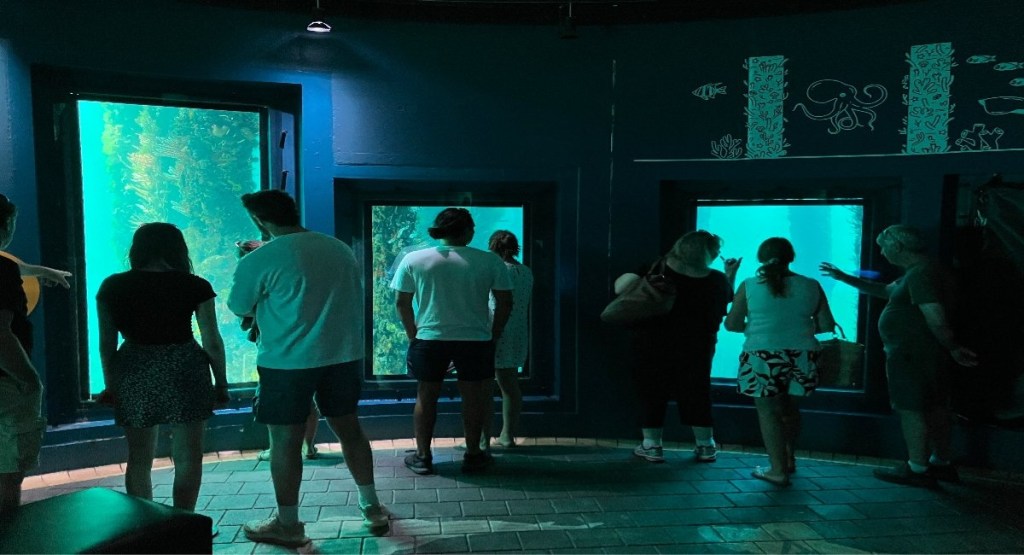
The Busselton Underwater Observatory descends 8 metres below the ocean’s surface and lets you view over 300 marine species through 11 viewing windows—without getting wet. It’s one of the best underwater observatories in the world, and the marine life is extraordinary.
What Makes it Unique
The jetty piles have been sitting in Geographe Bay since 1865. Over 160 years, they’ve become home to one of Australia’s largest artificial reefs, supporting a thriving ecosystem of tropical and subtropical corals, sponges, reef fish, and invertebrates you’d normally only encounter on a scuba dive.
The 9.5-metre diameter observation chamber holds up to 40 visitors at a time. Your guide will walk you through what you’re seeing, and because the reef is a living environment, every visit is a little different. The marine life shifts with the seasons, and there’s always something new.
Tips for visiting the Busselton Underwater Observatory:
- Morning visits tend to have the clearest water visibility, particularly in summer
- Winter months: The observatory adds VR goggles and interactive touchscreens when natural visibility is lower
- Certified divers can book a separate diving experience around the Busselton Jetty Sculpture Park beneath the jetty
- Accessibility: The observatory is equipped with a lift, so all visitors can reach the viewing chamber
What are the Things to do at Busselton Foreshore?

Photo credit: Unsplash
The Busselton Foreshore is the wide stretch of parkland, beach, and amenities running along the town’s coastline. It is a destination in its own right beyond the jetty. The same protected Geographe Bay conditions that made this a working port make the foreshore beach one of the most family-friendly stretches of the coast in Western Australia.
Beach and Outdoor Activities
The Busselton Foreshore keeps everyone happy, with something for every age and pace:
- Calm, shallow swimming beach suitable for families with young kids
- Grassed picnic areas and BBQ facilities along the foreshore
- A playground right near the jetty entrance
- Flat, paved paths for walking, cycling, and pram-friendly strolling
- Jetty jumping: a classic Busselton rite of passage in summer
Cafes and Dining
You’ll find several cafes and casual dining options right at the Busselton Foreshore, most with jetty or water views. They open early enough for a pre-walk breakfast and stay open through lunch. There’s something quite special about sitting down for a flat white with 1,841 metres of timber stretching out in front of you.
Events and Seasonal Activities
The foreshore hosts regular markets, family events, and seasonal festivals throughout the year. The busiest calendar runs through summer and school holiday periods. Check the City of Busselton events page before your visit to see what’s on during your trip.
What Do You Need to Know Before You Visit Busselton Jetty?
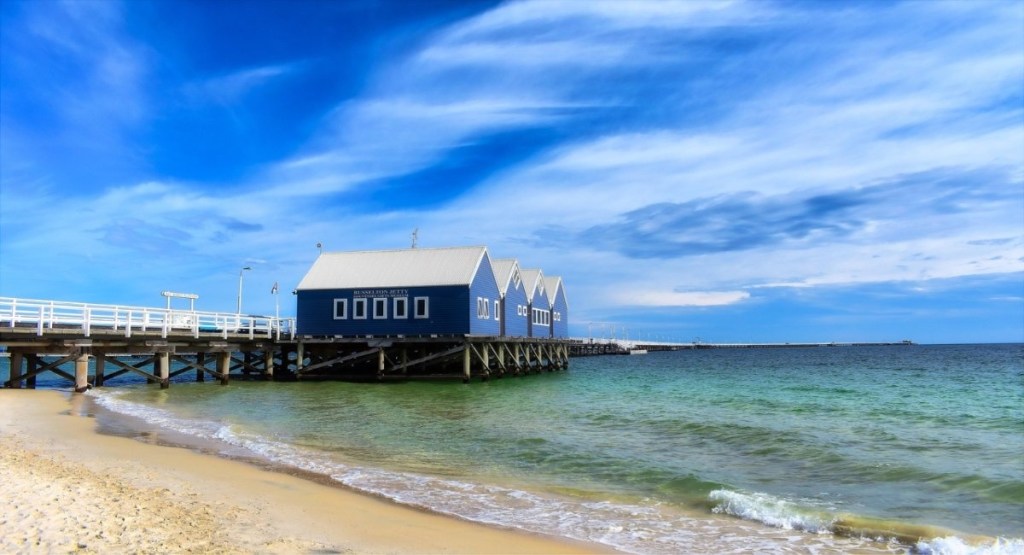
Photo credit: Pixabay
A little planning goes a long way. Here’s everything you need to sort before you go.
Opening Hours and Tickets
The jetty grounds themselves are accessible daily. The train and observatory operate on set schedules that vary by season. Always check the current timetable on the official Busselton Jetty website before heading out, as hours can change outside peak season.
Getting There and Parking
Busselton is around 220 kilometres south of Perth, a 2.5-hour drive south via the Forrest Highway and Bussell Highway. Parking is available at the foreshore car parks adjacent to the jetty entrance. There is generally plenty of space outside peak summer weekends, but arriving early is always the smart move in January and during school holidays.
Best Time to Visit
Busselton Jetty is worth visiting year-round, but the experience shifts quite a bit depending on when you show up.
- Summer (December to February): long days, warm water, and peak energy. Book ahead and get there early
- Autumn and spring: fewer crowds, softer light for photography, still warm enough to swim
- Winter (June to August): quiet and scenic, with the observatory’s VR enhancements adding an extra dimension
Accessibility
The Rio Tinto Solar Express is fully wheelchair accessible. A lift inside the Underwater Observatory ensures every visitor can reach the observation chamber. The foreshore paths are paved and flat, and the Interpretive Centre is designed to be welcoming for all visitors.
Where Should You Stay Near Busselton Jetty?

Staying in Busselton, Western Australia, puts you within easy reach of the jetty and foreshore, and gives you the freedom to visit at golden hour when the day-trippers have headed home. It’s a completely different experience when you’re not racing a clock.
Exclusive Escapes manages a curated selection of holiday homes in Busselton, ranging from beachfront properties with foreshore views to spacious family homes a few minutes’ walk from the jetty entrance. Take a peek at our Busselton holiday accommodation to find the right fit for your group.
If you’re building a longer South West WA itinerary, check out our guide to things to do in Dunsborough and explore our Dunsborough accommodation options while you’re at it.
For a full picture of the region, our visit to South West WA guide covers the best times, key highlights, and what to prioritise on your trip.
| You’ve Done the Research. Now Book your Busselton Getaway.Stay close to the jetty and explore Geographe Bay at your own pace. Wander through our full range of Busselton holiday homes and book your perfect base for a South West WA escape with Exclusive Escapes. |
Frequently Asked Questions about the Busselton Jetty
Why is the Busselton Jetty famous?
Busselton Jetty is famous for being the longest timber-piled jetty in the Southern Hemisphere at 1,841 metres. It’s also home to one of only six underwater observatories in the world, sitting above one of Australia’s largest artificial reefs.
Can you walk Busselton Jetty for free?
Yes, walking the full length of the jetty is free of charge. You only need a ticket if you want to ride the solar-powered train or visit the Underwater Observatory.
Can you see whales from Busselton Jetty?
Yes, occasionally. Humpback and Southern Right whales migrate through Geographe Bay between September and November, and sightings from the jetty do happen during peak season. For a guaranteed experience, book a dedicated whale watching tour from Busselton.
Do people swim at Busselton Jetty?
Yes, the waters around the jetty and along the Busselton Foreshore are calm, shallow, and family-friendly. Jetty jumping is also a popular summer activity for older kids and adults.
What can you do at Busselton Jetty?
You can walk the full 1,841-metre length, ride the solar-powered Rio Tinto Solar Express train, descend into the Underwater Observatory, snorkel around the sculpture park, browse the Interpretive Centre, and swim or picnic along the foreshore.